A review published in the Journal of Vector Borne Diseases on 21 August 2026 (featured by MalariaWorld on 8 October 2026) summarises the current situation and geographical patterns of insecticide resistance in malaria vectors and the consequences for malaria control.
Main points
- According to the abstract, indoor residual spraying (IRS) is a long-standing mosquito control measure; the widespread use of insecticides against malaria vectors has increased resistance, creating a major global challenge.
- The review draws on surveillance and monitoring programmes to summarise resistance patterns to commonly used classes: pyrethroids, organochlorines, carbamates and organophosphates.
- The authors assess the impact of resistance on malaria transmission and on vector control, and stress the urgent need for integrated resistance management, stronger surveillance and new vector control methods.
VPMA’s note
The review reinforces resistance management principles: do not keep repeating one insecticide class, combine non-chemical measures and monitor efficacy. The abstract gives no country figures; members should read the full text before quoting data.
- Source
- MalariaWorld – Global Status of Insecticide Resistance in Malaria Vectors: A Comprehensive Review (J Vector Borne Dis 2026)
- Published
- 21 August 2026
- Section
- Research · Insects, Vector-borne disease
- Journal
- Journal of Vector Borne Diseases (2026)
- DOI
- 10.4103/jvbd.jvbd_123_26
- Insecticide classes
- pyrethroids, organochlorines, carbamates, organophosphates
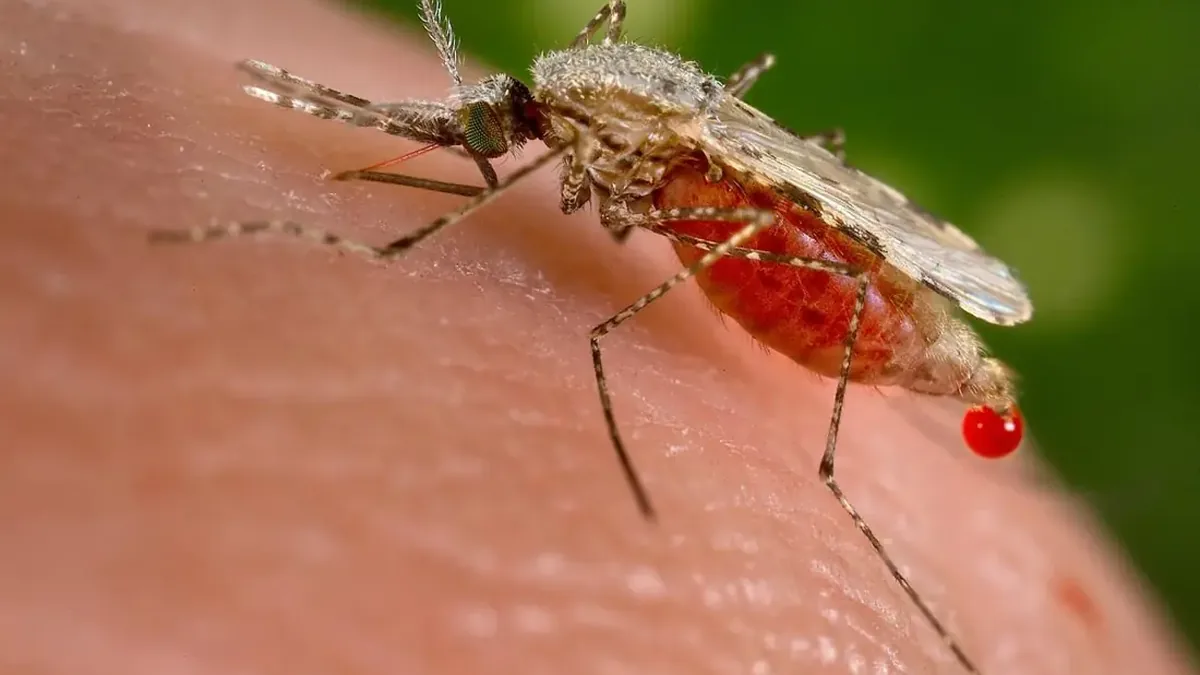
Editorial note: This is a short summary and comment by VPMA, not a full copy. The original text and copyright belong to the source cited. The summary page has no picture. The Anopheles photo comes from the insect page already on the Association website, not from the review.
Source: MalariaWorld – Global Status of Insecticide Resistance in Malaria Vectors: A Comprehensive Review (J Vector Borne Dis 2026) (summarised in English by VPMA). Read the Vietnamese page.