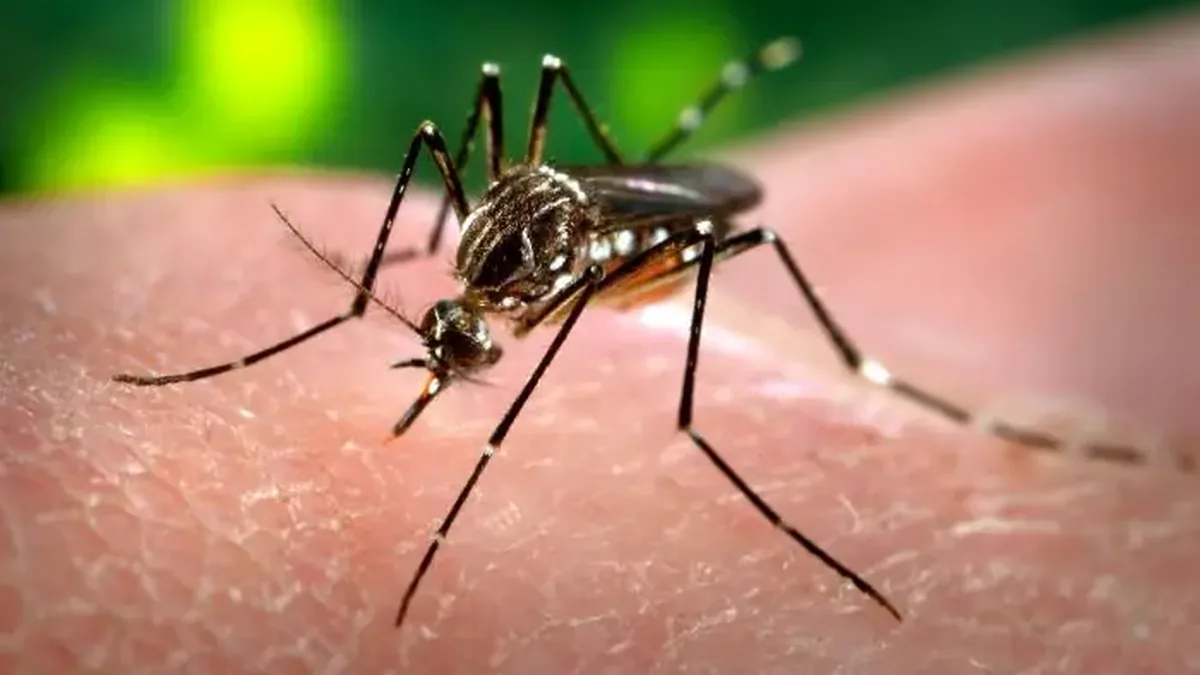
On 1 October 2026 the journal Trials published a study protocol by the Environmental Health Institute of Singapore’s National Environment Agency (NEA) with the National University of Singapore and Nanyang Technological University: a randomised controlled trial in high-rise public housing estates to test whether releasing male Wolbachia-infected Aedes aegypti, on top of routine vector control, can curb the growth of dengue clusters.
Main points
- Background: Wolbachia-based incompatible insect technique coupled with sterile insect technique (IIT-SIT) has been shown to be highly effective in suppressing Aedes populations and lowering dengue risk, but its efficacy against ongoing transmission is unknown.
- NEA defines a dengue cluster operationally as two or more cases within 150 m with illness onset within 14 days of each other. According to registration NCT06894901 on ClinicalTrials.gov, eligible clusters must be in public housing estates with at least 10 cases (the first 10 reported within 30 days of the first case), a sector-level Gravitrap index of at least 0.2, no previous Wolbachia releases and a distance of at least 700 m from existing release areas.
- Clusters are randomised to release or no-release arms. The two primary outcomes are the time to cluster extinction and the final cluster size (total cases), with follow-up of up to 3 years.
- The trial was prospectively registered on 20 March 2025 and is fully funded by Singapore’s Ministry of Finance. The authors expect it to give an epidemiological basis for adding IIT-SIT to outbreak management tools, and to test operational feasibility and identify difficulties before larger-scale use.
VPMA’s note
The Association website has already reported Singapore’s Wolbachia results on prevention. This new protocol aims to use male Wolbachia mosquitoes to handle active outbreaks, alongside spraying and larval control. It is only a protocol with no results yet; members should follow it when data are published.
- Source
- Trials – Assessing the efficacy of incompatible insect technique coupled with sterile insect technique (IIT-SIT) to manage large dengue clusters: study protocol for a randomized controlled trial
- Published
- 1 October 2026
- Section
- Research · Insects, Vector-borne disease
- Journal
- Trials (2026), open access
- DOI
- 10.1186/s13063-026-10020-1
- Registration
- NCT06894901
Source: Trials – Assessing the efficacy of incompatible insect technique coupled with sterile insect technique (IIT-SIT) to manage large dengue clusters: study protocol for a randomized controlled trial (summarised in English by VPMA). Read the Vietnamese page.