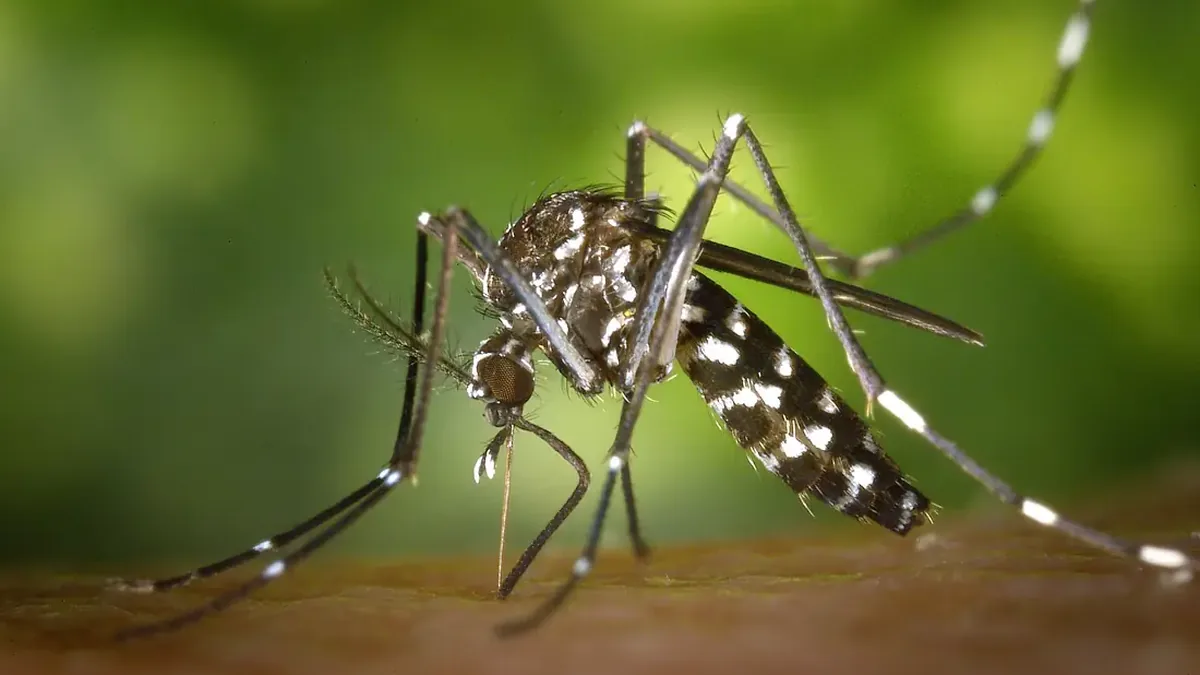
A study published online in Communications Medicine on 8 October 2026 by authors from the CUNY Graduate School of Public Health and Health Policy, the US National Library of Medicine (NIH), New York University and the Zucker School of Medicine at Hofstra estimates global habitability for Aedes mosquitoes at high spatial resolution in five-year steps from 1970 to 2024.
Main points
- Method: a machine learning model trained on satellite data and mosquito observations (including iNaturalist records), which generalises better where observations are sparse while keeping performance similar to models used in standard practice.
- Mosquito ecologies are shifting in regionally specific ways: risk has decreased near the equator and increased in historically temperate climates such as the United States, the European Union and China.
- Despite this decrease relative to historical averages, regions near the equator remain among the highest-risk areas worldwide.
- Overall, the parts of the globe that support Aedes mosquitoes have expanded markedly, and the global population at risk of mosquito-borne disease is rising steadily in a linear way. This is an accepted version shared early and will be edited before the final version.
VPMA’s note
Vietnam lies in the tropics and stays in the high-risk group in these results. Using satellite images and machine learning to predict where mosquitoes live helps health authorities target resources; members can follow such risk maps as a planning aid for surveillance, but treatment decisions must still rest on local entomological surveys.
- Source
- Communications Medicine – Shifting mosquito vector ecologies pose new risks for new stakeholders
- Published
- 8 October 2026
- Section
- Research · Insects, Vector-borne disease
- Journal
- Communications Medicine (2026)
- DOI
- 10.1038/s43856-026-01937-4
- Period analysed
- 1970–2024
Source: Communications Medicine – Shifting mosquito vector ecologies pose new risks for new stakeholders (summarised in English by VPMA). Read the Vietnamese page.