
Wits University reported on 8 September 2026 that the SIT programme of the National Institute for Communicable Diseases (NICD) and Wits ran a 12-week trial in Mamfene, KwaZulu-Natal, releasing about 50,000 sterile males every two weeks. The target population declined during releases and rebounded when they stopped. The findings are not yet published or peer-reviewed.
Main points
- Aim: to supplement indoor residual spraying (IRS). Anopheles arabiensis bites and rests outdoors, so it bypasses IRS and insecticide-treated nets; wild females mate only once.
- The Johannesburg mass-rearing facility produces 500,000 mosquitoes a week. Sexes are separated with a genetic sexing strain carrying a dieldrin-resistance marker linked to the Y chromosome; males are sterilised by X-ray; chilled adults were transported more than 500 km to the release area.
- Next steps (per Dr Givemore Munhenga): data for regulators, larger epidemiological trials, a local elimination trial on Grande Glorieuse Island, support for neighbouring countries; drone release is being considered.
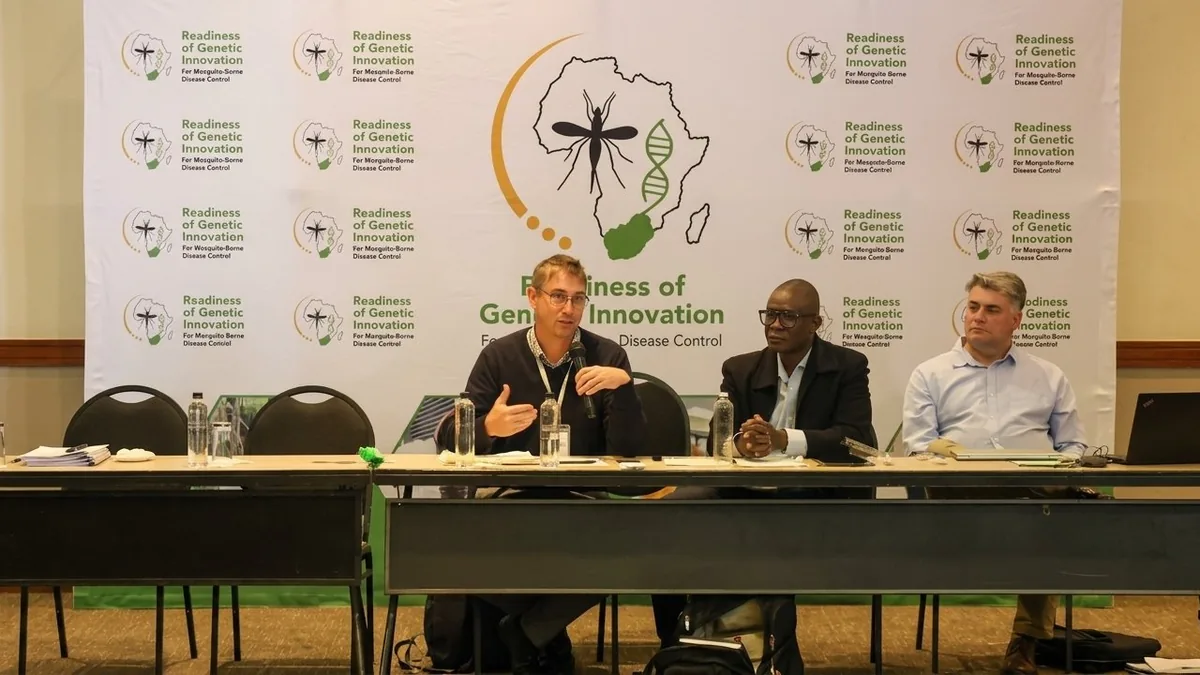
- A 24–28 August 2026 workshop hosted by Wits Health Consortium (with Gates Foundation support) shared experience: Singapore automated rearing of 24 million eggs a week and cut local dengue transmission by 70%; Djibouti uses genetically modified eggs from Flyttr.
VPMA’s note
A South African trial with preliminary, non-peer-reviewed results. It says nothing about epidemiological impact or use in Vietnam.
- Source
- Wits University
- Published
- 8 September 2026
- Section
- New approaches to insect control
- Trial site
- Mamfene, KwaZulu-Natal
Editorial note: This is a short summary and comment by VPMA, not a full copy. The original text and copyright belong to the source cited. Picture from the Wits University article: delegates at the Wits Health Consortium Sterile Insect Technique workshop.
Source: Wits University (summarised in English by VPMA). Read the Vietnamese page.