A paper of 25 September 2026 in PLOS Neglected Tropical Diseases interviewed in depth 15 people directly involved in the pilot of the E-Dengue early warning system (September–December 2025) in An Giang and Tay Ninh: a lack of supportive policy, limited understanding of early warning among stakeholders and operational difficulties kept alerts from turning into proactive larval control.
Main points
- Journal: PLoS Negl Trop Dis 20(9): e0014754. DOI 10.1371/journal.pntd.0014754. Received 24 February 2026; accepted 11 September 2026; published 25 September 2026. Authors: Do KQ, Nguyen HT, Nguyen TTT, Pham CT and colleagues (University of Queensland, Griffith University, Pasteur Institute in Ho Chi Minh City, HCMC CDC, Hanoi Medical University). The E-Dengue project is funded by the Wellcome Trust (UK).
- According to the paper, E-Dengue predicts outbreaks up to three months ahead using meteorological, sociodemographic, epidemiological and preventive data, with an overall accuracy of 69%. Annual reported cases for 2021–2025 given in the paper are 8,377 in An Giang and 10,713 in Tay Ninh; in 2025 Tay Ninh had a large province-wide outbreak.
- Interviewees (September–October 2025) included staff of the provincial Departments of Health, CDCs, regional health centres, commune People’s Committee leaders, commune health stations and health volunteers in the two provinces.
- Community barriers: people tend to think dengue comes only in the rainy season, so they act little on early alerts; many see larval control as the job of the health sector and local government; economic hardship, water scarcity made worse by extreme weather and unsuitable measures reduced household participation. The authors conclude that warning information alone is not enough.
VPMA’s note
A qualitative study in Vietnam with a small sample (15 people). When members join local larval control campaigns, residents need specific, practical guidance suited to their situation (especially where water must be stored), not just risk notices.
- Source
- PLOS Neglected Tropical Diseases
- Published
- 25 September 2026
- Section
- Research · Vector-borne disease
- Journal
- PLoS Negl Trop Dis 20(9): e0014754
- DOI
- 10.1371/journal.pntd.0014754
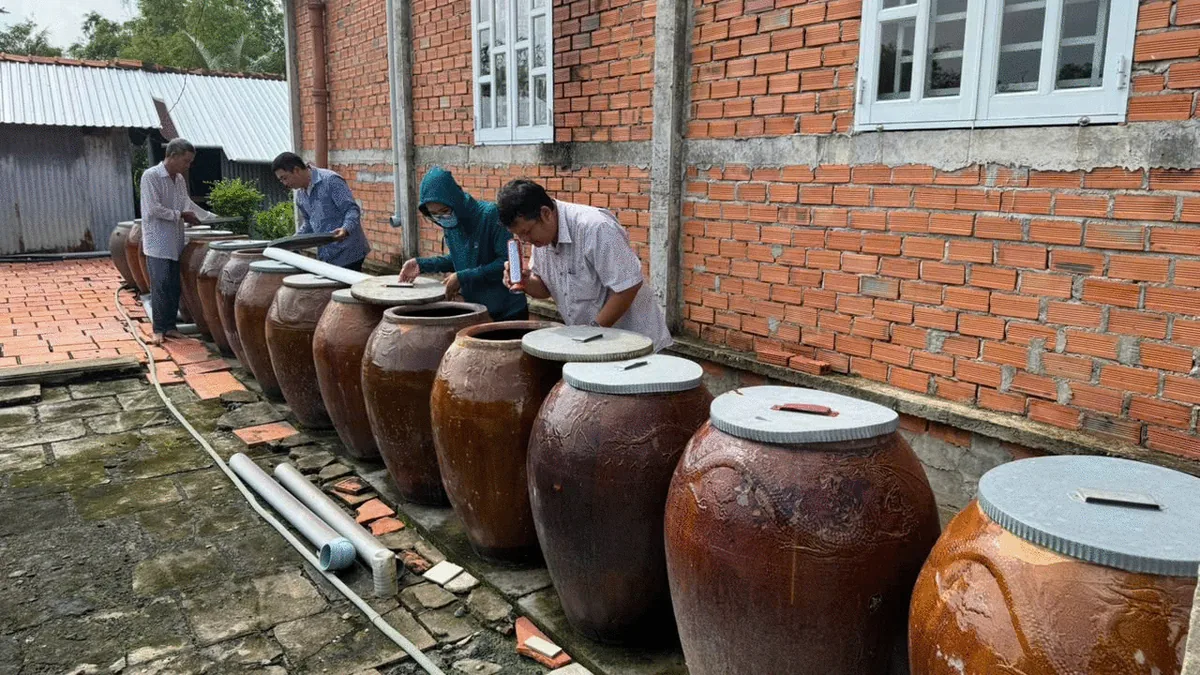
Editorial note: This is a short summary and comment by VPMA, not a full copy. The original text and copyright belong to the source cited. Picture: the striking image of the PLOS NTDs paper, staff checking household water jars, CC BY licence.
Source: PLOS Neglected Tropical Diseases (summarised in English by VPMA). Read the Vietnamese page.